Robotic carving
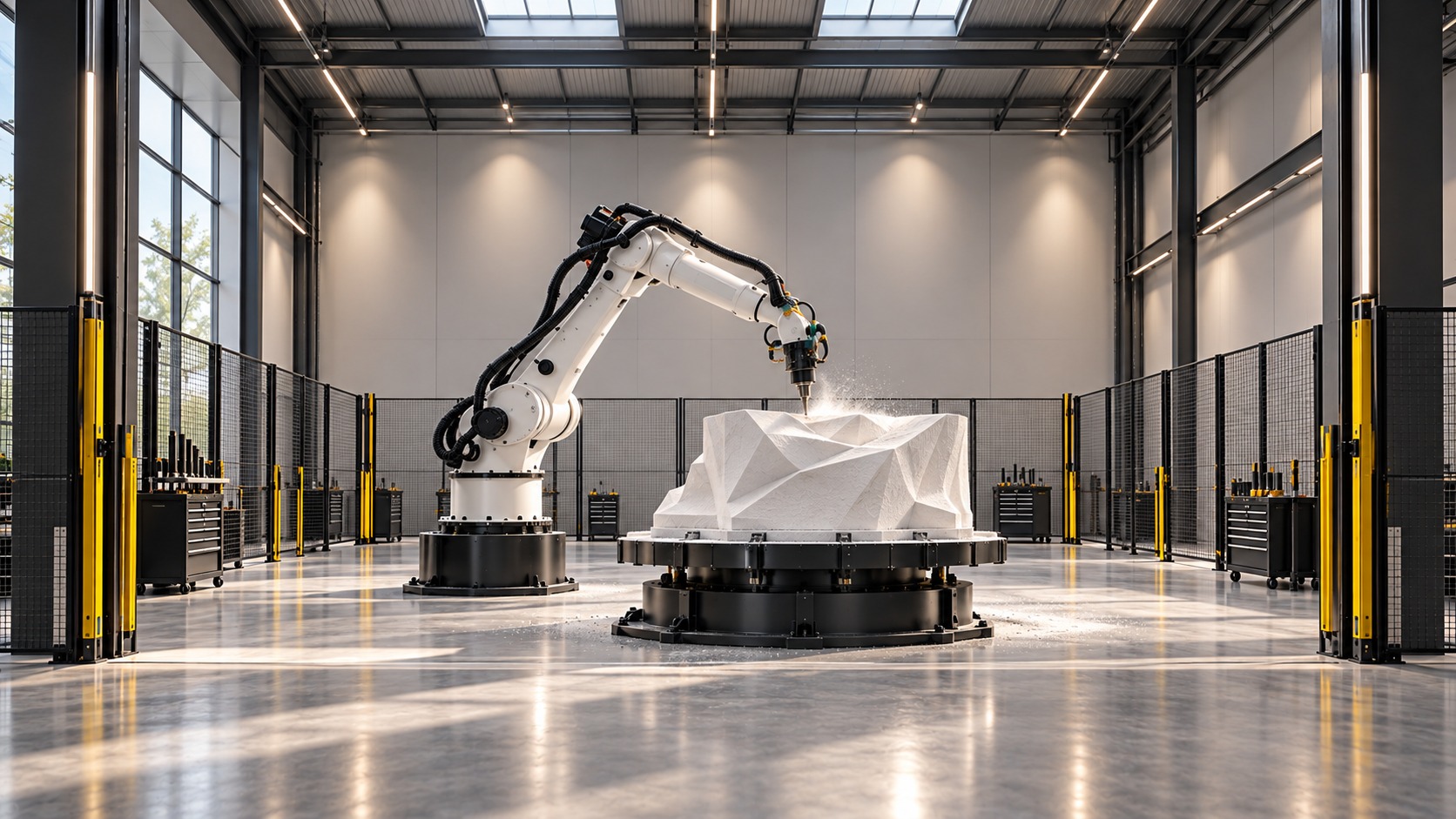
Complex 3D surfaces, sculptural forms and deep geometries in foam and other machinable materials.
GIOI Robotics Large-scale Fabrication
Robotic carving and multi-axis fabrication for complex forms,
sculptural surfaces and large-scale physical prototypes.
What we do
Our robotic cells extend fabrication beyond the work envelope and geometry of traditional CNC systems. We use industrial KUKA robots to machine, carve and shape large parts with multi-axis freedom.
Complex 3D surfaces, sculptural forms and deep geometries in foam and other machinable materials.
Parts and forms that exceed the practical working envelope of conventional machining centers.
Rotary and multi-sided setups are evaluated around the part geometry, tooling and workholding requirements.
Digital geometry translated into controlled robotic motion, machining strategy and physical output.
Our systems
Each cell is selected for a different range of part sizes and fabrication requirements.
Precision / Flexibility
Our KUKA platform for foam carving, sculptural forms and physical prototypes. Tooling, workholding and access are planned around each project; rotary requirements are reviewed during the technical assessment.
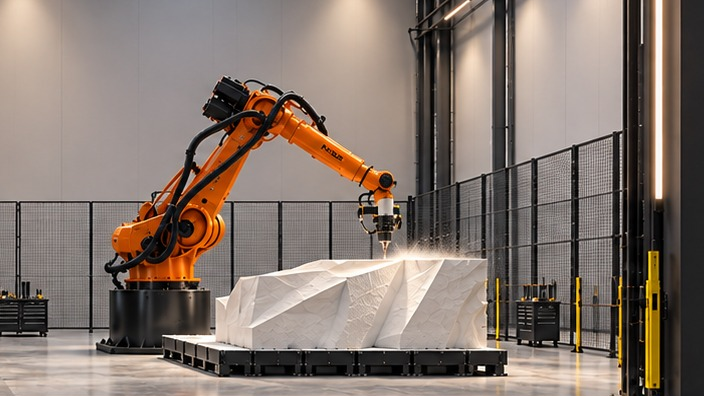
Reach / Heavy-duty scale
A larger industrial platform for projects where reach, workpiece size and access are central to feasibility. Material, tooling and setup requirements are assessed before defining the fabrication process.
Workflow
Every robotic project starts digitally and is developed around geometry, material, reach, tooling and finish requirements.
Review geometry, scale, material and project constraints.
Refine CAD, fixtures, stock and machining strategy.
Generate and validate robotic toolpaths and orientations.
Machine the part using the appropriate robotic cell.
Inspect, detail and prepare the physical result for delivery.
Discuss a robotic project
Share the model, material, scale and intended finish so we can begin with the right questions.
Start a Project